


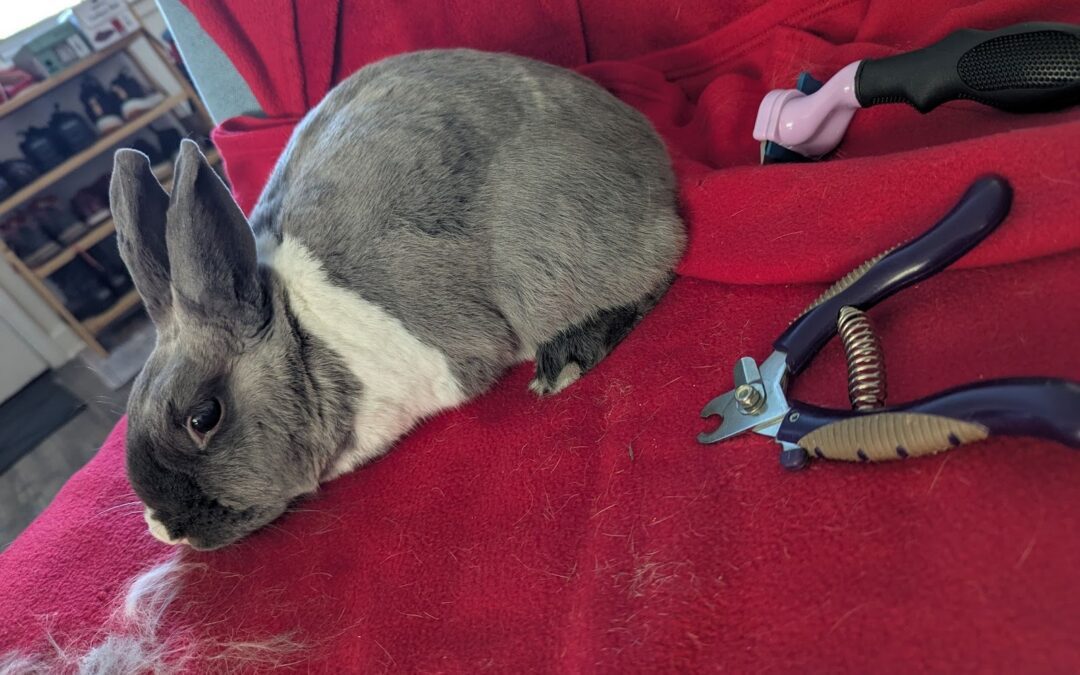
How do you start? First, identify a place you can put your rabbit that will make it easy for a 15-30 minute session of grooming to occur. For me, this is placing my rabbit on the couch or on a low swivel chair. Fortunately, my rabbit is too nervous to jump off of these areas which gives me plenty of time to groom her. Even if she did jump down, the distance is short and unlikely to cause injury. If your rabbit is more adventurous and willing to jump away, you may need a second person to hold the rabbit. Generally, adult rabbits will assess the height carefully before leaping down, but not all rabbits are the same.
I use a combination of lint rolling, a small pink FURminator comb, and my fingers to pull away as much excess fur as I can. Your rabbit may not enjoy this process, but a short period of mild irritation is preferable to, and less expensive than, a long hospitalization that may involve gastrointestinal surgery.
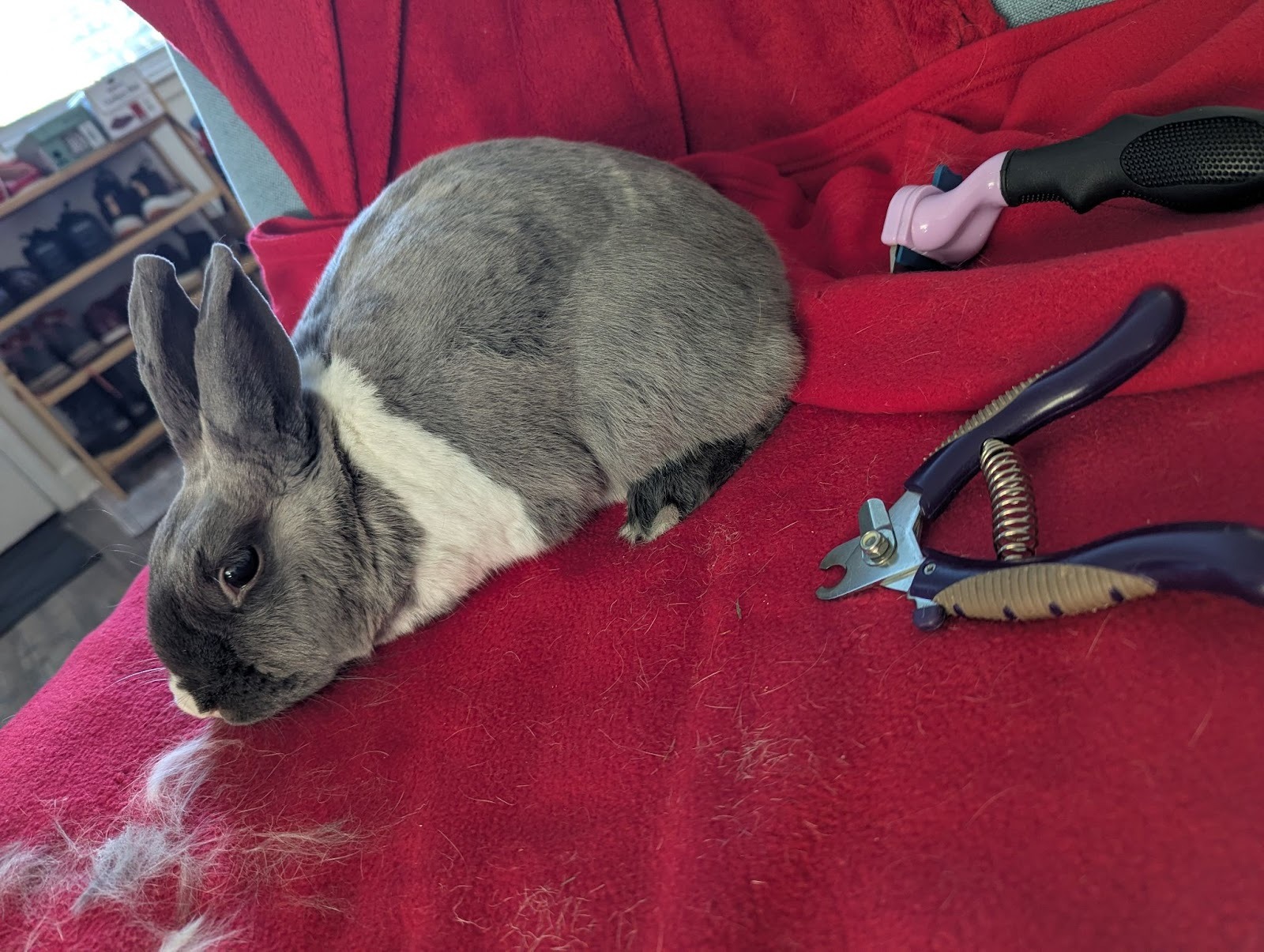
My rabbit Nanaimo does not enjoy being groomed, but her molts can be heavy and she has already had a fur blockage once before that required surgery.
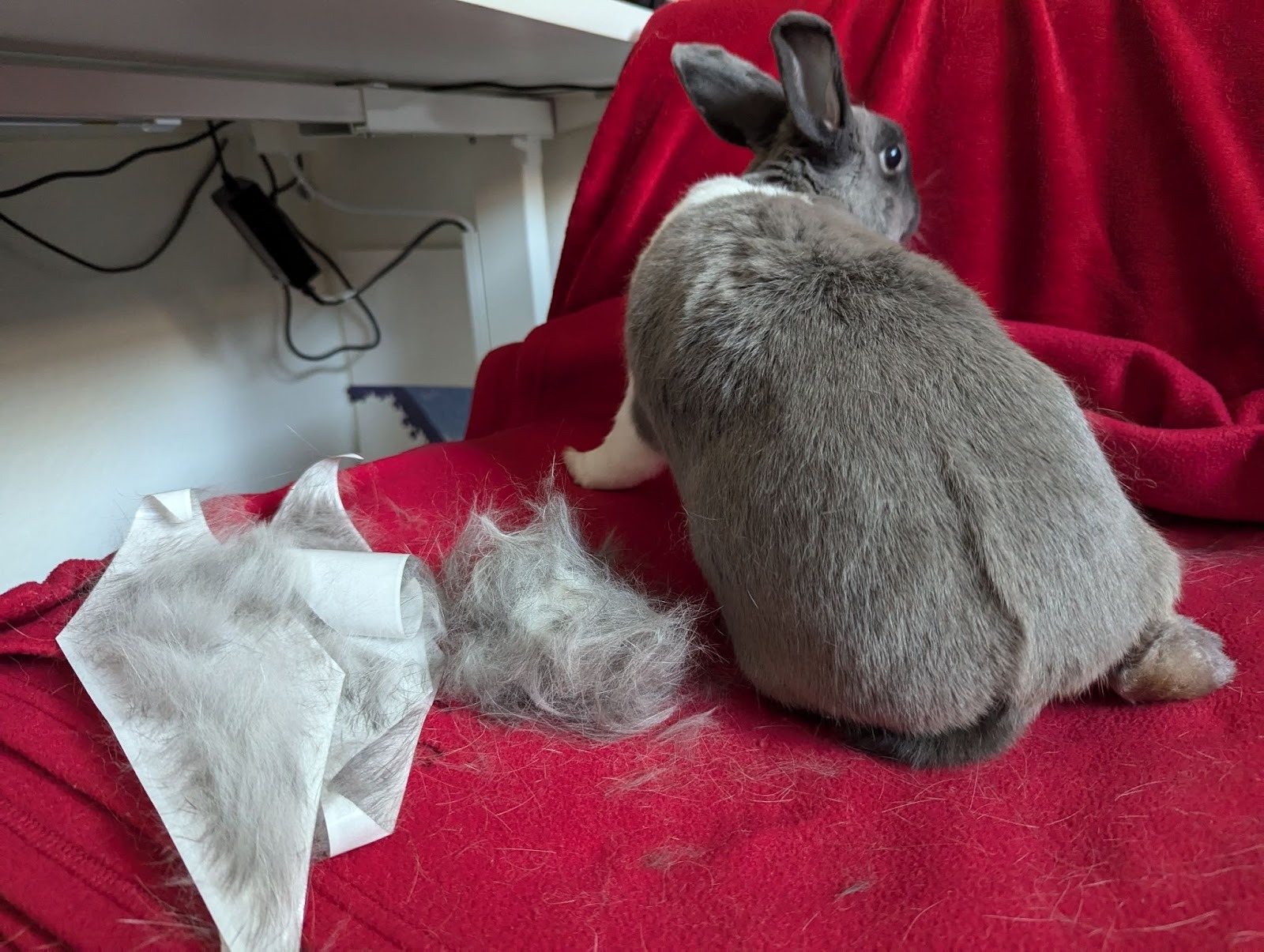
Lint rollers are effective in pulling loose fur away.
If your rabbit is too reactive or unpredictable for this process, you may want to ask for professional help. Your veterinarian may be able to provide you with a light sedative to use at home, or you can bring your bunny to our veterinary clinic and we can do the grooming for you.
Radiographs (X-rays) can be used to help identify gastrointestinal obstructions. The first two images show a rabbit with a distended stomach due to an obstruction. The next two images show a normal rabbit’s stomach.
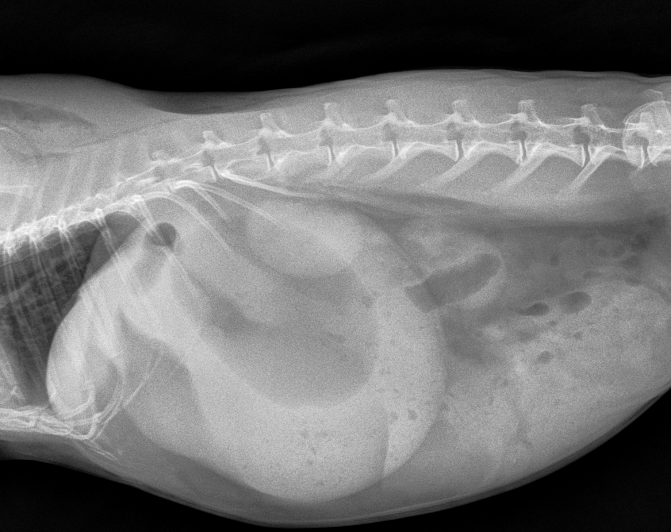
The side view of a rabbit’s abdomen with an obstruction
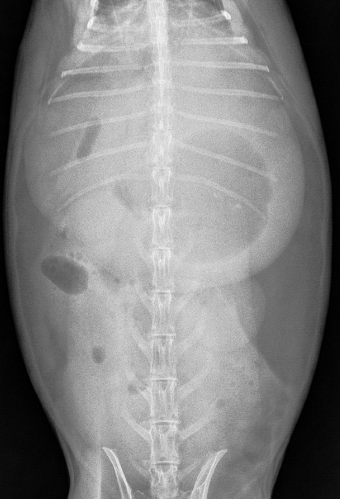
The top view of a rabbit’s abdomen with an obstruction
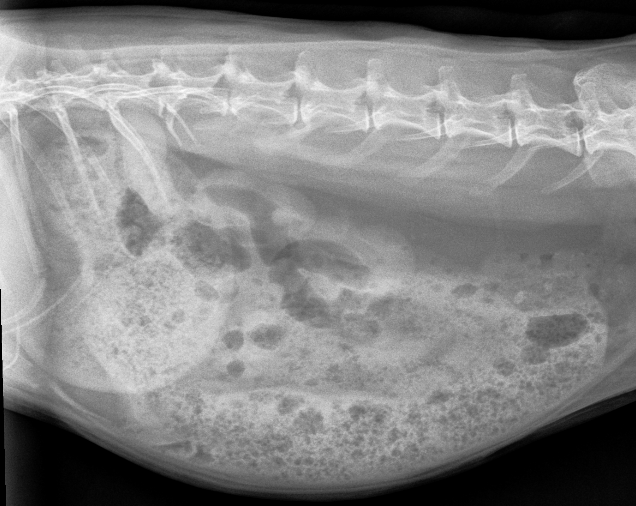
The side view of a healthy rabbit’s abdomen
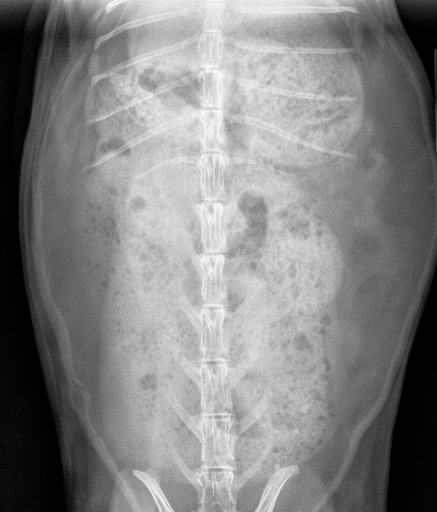
The top view of a healthy rabbit’s abdomen
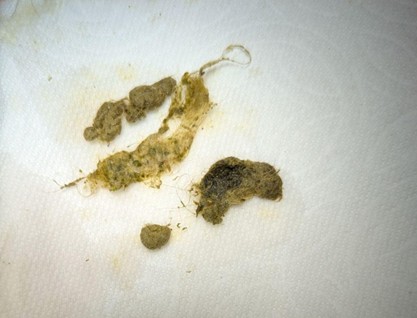
This is an image of fur clumps removed from the stomach of a rabbit that underwent surgery.
If you need help grooming your bunny, or have questions about your bunny’s health, please contact us at 831-440-8590 or at info@exoticpetclinic.com.