


Name
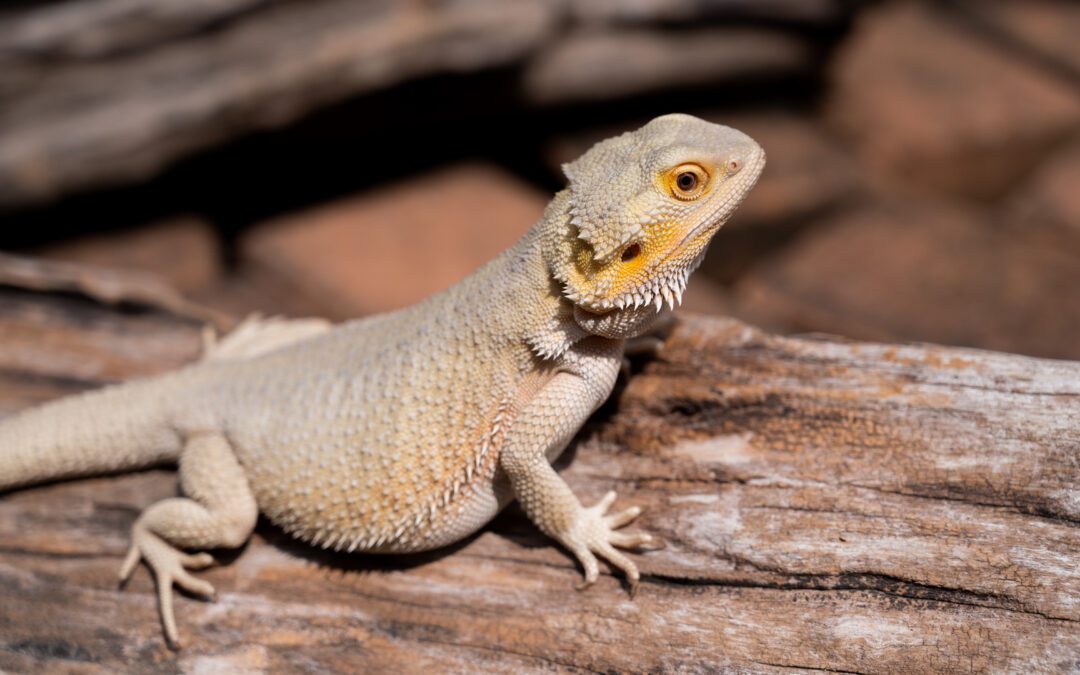
Bearded dragon (pogona vitticeps)
Average Lifespan
6-12 years
Diet
Omnivorous, insects & vegetables
Age to sexual maturity
1-2 years, dependent on growth rate
Bearded dragons make wonderful pets, but require specialized care. They require heat support, calcium and vitamin supplementation, and a carefully managed diet.
Enclosure & Environment
Bearded dragons should be kept in a well ventilated enclosure that gives them enough space to run around. A 4’x2’x2’ enclosure (120 gallon tank) or larger is recommended for adults, with a screen lid to allow for good airflow. When choosing a substrate for the floor of their enclosure, it is wise to pick an option that they cannot ingest, like newspaper, paper towels, or reptile carpet. Sand, gravel, wood chips, mulch, coconut coir, ground walnut shells, and dirt can cause intestinal obstruction and should be avoided. These options are also very difficult to clean and can provide good living conditions for parasites. If your beardie is living on sand or other loose substrate, offer food on a shallow dish or outside the enclosure to reduce the risk of substrate ingestion. Always provide a fresh, shallow bowl of water large enough to fit your lizard. Bearded dragons drink water better when their bodies are partially submerged. If your pet does not soak or drink well, you can bathe them twice a week in warm water. It is common for beardies to poop during their bath or in their water bowls.
Make sure the enclosure is kept at the proper temperatures. The temperature gradient during the day should range from 76 ℉ on the cool side to 86 ℉ on the warm side, with a basking area ranging from 90-100 ℉. Night time temperatures should drop no lower than 70 ℉ on the cool side. Temperatures can be maintained with a combination of heat lamps, heating pads, or other heat emitting devices. Keep a thermometer in the cage to track the temperature over time. Bearded dragons can quickly overheat if they get too warm, which can happen if they are outside and they have no way to avoid the sun or if their setup does not have a gradient of temperatures. If bearded dragons get too cold, they will have impaired immune system function and are much more likely to get sick.
Bearded Dragons need daily access to UVB light, either from sunlight or from a UVB-producing fluorescent light. UVB light is required for proper calcium metabolism. Make sure to follow the manufacturer’s instructions regarding distance from your reptile and replace the bulb every 6-12 months.
Diet
Bearded Dragons are omnivores, eating a mix of insects, leafy greens, edible flowers, and commercial pellets in captivity. For an adult bearded dragon, an optimal diet consists of 50% dark leafy greens, 20% grated or chopped vegetables, 25% insects, and no more than 5% fruits. To keep their diet balanced for all of their nutritional needs, it is recommended to use both a calcium supplement (without vitamin D3) with every insect feeding and a multivitamin (with vitamin A and D3) once a week.
Beardies should have a salad offered daily. Bearded dragons don’t chew their food the same way we do, so it is important to offer them thinly chopped or shredded vegetables, or they can get food stuck in their throat. Leafy greens should include a variety of dark leafy greens, such as mustard greens, collard greens, dandelions, kale, and the like. Brightly colored vegetables are usually their favorite, such as grated or thinly sliced carrot, bell pepper, squash, zucchini, sweet potato, broccoli, and cauliflower. Pesticide free edible flowers like roses, dandelions, pansies, honeysuckle, hibiscus, or nasturtiums. Small, sliced up pieces of fruit can be given as occasional treats. Whole berries (blueberries, raspberries, etc.) can get stuck in their throats and should not be offered. Safe fruits to offer bearded dragons include papaya, melon, banana, figs, apples, mango, dates, peaches, apricots, and berries.
For optimal nutrition, make sure to feed a variety of greens and vegetables, not just your beardie’s favorites. If your pet is reluctant to try new foods, try mixing them together with more familiar ingredients.
Adult bearded dragons should be offered insects 2-3 times per week and juvenile bearded dragons should be offered insects daily. Offer a wide variety of insects, including meal worms, crickets, roaches, silkworms, wax worms, super worms, etc. Insects must not be longer than the distance between your bearded dragon’s eyes. Offer as many insects as your beardie can and will eat in 5-10 minutes, and avoid overfeeding bugs or feeding by hand. If your lizard eats too many bugs, they will preferentially ignore the more nutrient dense greens in favor of fatty insects. Be aware that insects are nutritionally inadequate at purchase and need to be fed a calcium and multivitamin enhanced diet for a day or two (gut-loading) before you feed them to your dragon. Sprinkle or dust insects with a calcium supplement (without vitamin D3) just before feeding them to your lizard with each feeding, and dust insects with a multivitamin supplement (that contains vitamin A and vitamin D3) once a week during a different feeding.